

Technology
How To Create Enterprise Value with Technology In B2B
In the industrial B2B world of manufacturing, distribution, wholesale, and industrial services, technology has shifted...

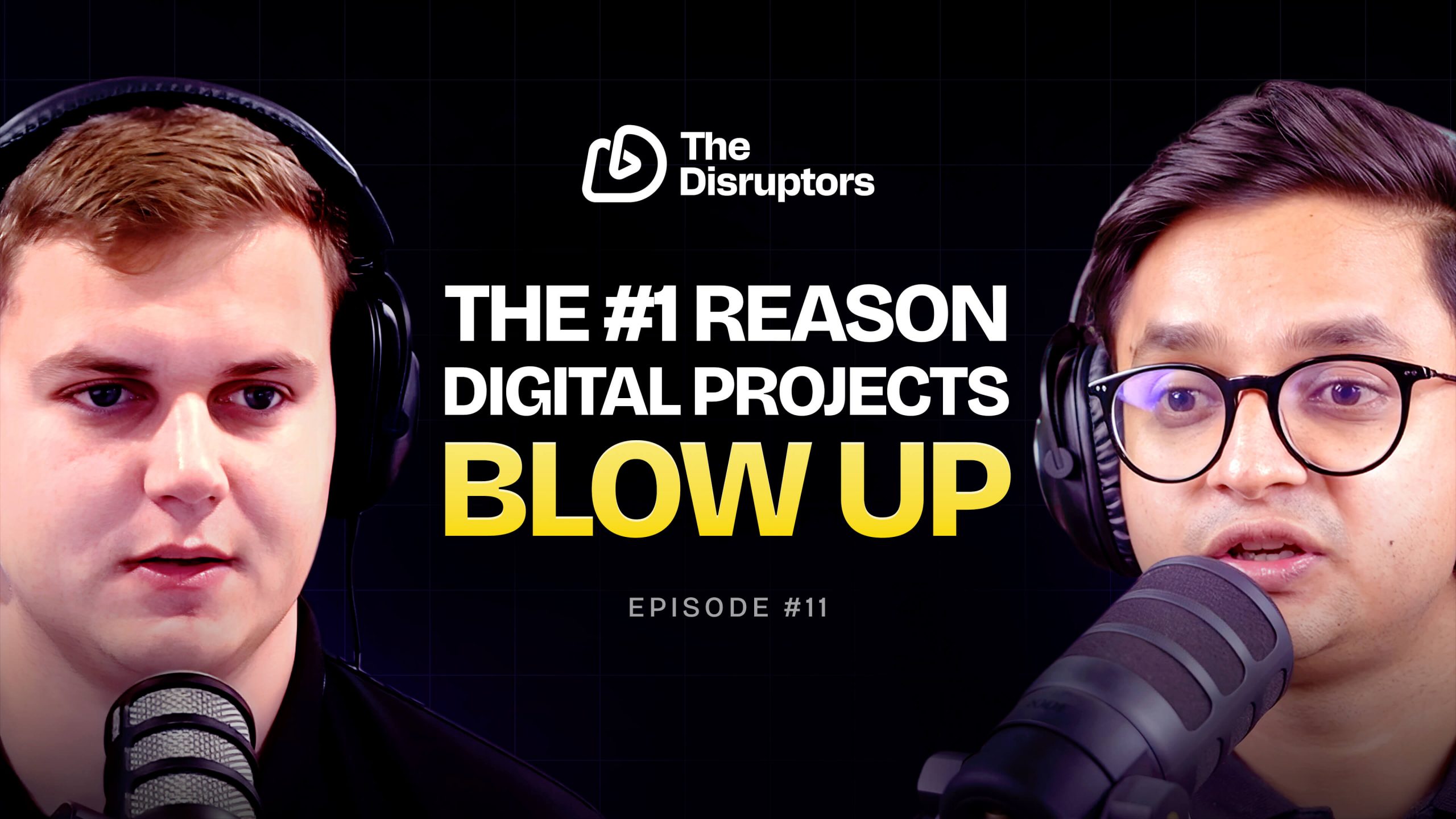


Show: The Disruptors Episode: 11
Publish Date: 08 September 2025
Most digital transformation projects fail before they even start — because discovery is done wrong.
In this episode of The Disruptors, Julian Wallis hosts a conversation with Ashish Paudel, Intuji’s Chief Operating Officer, on why misaligned discovery derails digital transformation, how it drains profitability, blocks scale, and destroys enterprise value — and what to do differently.
00:00 – Intro
00:45 – Why discovery is more than feature gathering — setting vision and outcomes
04:20 – Moving from feature-led thinking to outcome-driven transformation
07:00 – How misaligned discovery creates failed projects and wasted investment
10:40 – Superficial discovery: why box-ticking never aligns stakeholders
14:10 – The costly gap between leadership assumptions and end-user reality
18:30 – Good vs bad discovery — asking the right questions to find true needs
22:15 – Why proper discovery must be anchored in PSV: Profit, Scale, Value
26:00 – Discovery as the foundation before agile flexibility
30:45 – Case studies of unused features and misaligned outcomes
36:20 – Designing with stakeholders, not for them — lessons from the field
Skipping proper discovery doesn’t save time or money — it guarantees misalignment, rework, and failure. Done right, discovery becomes the foundation for profitability, scalable growth, and long-term enterprise value.
Aashish Paudel, COO at Intuji (00:00:00:00 – 00:00:09:15)
This is where the businesses say we invested lots in your company to create a product, but now it’s not giving us revenue. Why? Because you didn’t do a proper discovery.
Julian Wallis, CEO at Intuji (00:00:09:16 – 00:00:14:03)
Bad discovery. Very much is ticking the box, and all it does is create some documents.
Aashish Paudel, COO at Intuji (00:00:14:03 – 00:00:19:19)
You are looking from the lens of the technical point of view, but what about the management, the company point of view.
Julian Wallis, CEO at Intuji (00:00:19:23 – 00:00:25:01)
Biggest cost savings have always come from being able to scale opportunities.
Aashish Paudel, COO at Intuji (00:00:25:06 – 00:00:30:00)
If you do not plan, then you are planning to fail. That’s what I think about discovery.
Julian Wallis, CEO at Intuji (00:00:30:02 – 00:00:40:23)
Well, welcome to another episode of The Disruptors. Ashish, it’s good to have you on. We’re doing a bit differently this week. Normally Ritesh is hosting and I’m on there, but, good to. Good to have you on.
Aashish Paudel, COO at Intuji (00:00:41:01 – 00:00:42:06)
Yeah, thank you very much.
Julian Wallis, CEO at Intuji (00:00:42:08 – 00:01:16:04)
Yeah. Excited to, to go through our chat. So appreciate it. Yeah, yeah. Awesome. Well, you’ve obviously been with us for, for a long time and, had a lot of experience across the, different roles as business analyst. And now you’re leading up our operations, done a lot of stuff around the projects and everything. What I wanted to discuss, really, today was, I think something that we’ve had a lot of discussions about, across the, across the years, discovery, and how important it is to to get it right from the beginning and make sure that we set a solid foundation for, for the project from, from there.
Julian Wallis, CEO at Intuji (00:01:16:05 – 00:01:26:05)
So, yeah, I guess kicking, kickin straight off into it, why don’t you give us a bit of an idea of your, your thoughts on what discovery is?
Aashish Paudel, COO at Intuji (00:01:26:07 – 00:01:52:02)
Okay. So talking about my experience previously, I thought discovery was just focus to feature. We’ll go to client, we’ll ask what are the features that you want? We’d note it down, we’ll create user story and develop it. But once we had a couple of on-site discovery workshop, then I realised, okay, it’s not about feature, but it’s about the vision that they are looking after and the problem they are solve, want to solve.
Aashish Paudel, COO at Intuji (00:01:52:04 – 00:02:16:22)
So rather than us being completely focused on features and having a blinders, we have a open spectrum where they discuss the problem, we again have multiple question to follow that up, and looking beyond what they are showing us. So rather than just focusing on what they are talking about, we go behind that. What was the actual cause of that problem and trying to solve it?
Aashish Paudel, COO at Intuji (00:02:16:22 – 00:02:26:19)
So that’s the real discovery, rather than being confined with the features. So that’s what I have learned from my discovery phase.
Julian Wallis, CEO at Intuji (00:02:26:21 – 00:02:53:12)
Yeah, yeah, I, I agree, I think from, from my perspective, discoveries moving from feature based outcomes to, to outcome based outcomes essentially, which is essentially rather than just focusing on the features, this is what we want to do. This is what we want to deliver. This is what we want here. This is what we want there. It’s, where do we want to get the business, where we, where, what’s this initiative trying to achieve from obviously using our PSV Thinking®?
Julian Wallis, CEO at Intuji (00:02:53:14 – 00:03:18:05)
How do we increase profitability? How do we enable scale and how do we build enterprise value? But then breaking those down into specific actionable outcomes across each one of those pillars for this initiative, for the business or whatever that we’re working towards. But so many people still think in features and they still talk in features. Everything talks in features rather than the actual outcome that we’re trying to we’re trying to achieve. Now, don’t get us wrong.
Julian Wallis, CEO at Intuji (00:03:18:05 – 00:03:39:10)
Clearly we still got to talk about features, right? We still got to know exactly what we’ve what we’re trying to do. We’ve got to get clear and on the same page. But if we have features without kind of the outcomes, then what are we doing the features for? And, we can’t ask the right questions about the features, trim the features down, add more things in, etc. because we don’t understand the overall picture, we don’t actually understand what we’re trying to achieve.
Julian Wallis, CEO at Intuji (00:03:39:10 – 00:04:02:08)
Right? And I think it’s important as you said, it’s a learning process you go through with clients, and it’s important for us to understand. And even if clients are working, or individuals, anyone listening that are working on this themselves is that, Focus, get clear on the outcomes you’re trying to achieve. Don’t start with all this is the tool we’re going to implement.
Julian Wallis, CEO at Intuji (00:04:02:10 – 00:04:16:23)
This is the tool we’re going to build or this is the feature that we need. That might spark an idea, but then go, we need to strip it back to it to this is what we need to achieve from an outcome perspective I guess. What do you say on that?
Aashish Paudel, COO at Intuji (00:04:17:01 – 00:04:35:16)
Yeah. Because client do not know what exactly want. And if we start with feature, okay you want this feature that feature. Then again, you’ll be confined and say yes I want that. And no, I don’t want that. But rather than we pointing them to a specific domain, we lay out a free white paper where they can draw.
Aashish Paudel, COO at Intuji (00:04:35:16 – 00:05:00:04)
Okay, these are my current problems, and I expect my company to go here by solving this, then it’s now our responsibility to take those talks, those discussions and then layout in the proper format. Yes, the outcome will again be feature-driven, but it’s from where we came, rather than coming from feature to development is coming from vision to feature and then development.
Aashish Paudel, COO at Intuji (00:05:00:07 – 00:05:16:23)
So it also gives them idea about, okay, they are talking about this thing. What if we do this? So it again sparks them too, rather than us also. So yes, I think that’s the good thing that brings when you do a proper discovery.
Julian Wallis, CEO at Intuji (00:05:17:01 – 00:05:48:10)
Yeah. Yeah. And we know the challenges. Right. Of when we do a superficial discovery or we don’t go deep enough, we don’t go clear enough into the problems is, we’ve seen it time and again with projects that we even haven’t worked on necessarily. We’ve seen it with projects we have worked on, when mistakes been made, with not getting on the same page, but more importantly, we’ve had yeah, a lot of people come to us and things and that with failed projects and typically it comes back to misaligned expectations and not enough discovery.
Julian Wallis, CEO at Intuji (00:05:48:10 – 00:05:50:01)
Right. Is that fair to say?
Aashish Paudel, COO at Intuji (00:05:50:03 – 00:06:11:04)
Yeah, because you know, we call it North Star. So if you are heading towards one North Star and we as a development team are heading towards that star, then it’s likely that we will achieve it. But when you are assuming it, when you are pretending that you know everything about the company, then you are choosing different North Star and they chasing different North Star.
Aashish Paudel, COO at Intuji (00:06:11:04 – 00:06:31:06)
So that is creating the misalignment. And with the projects that comes to us, we feel that and we have also experienced that. Also not in the project that the client come to us, but with our earlier project, we made the same mistake, we were going totally on the features we were assuming, oh, this is that, the client were expecting that.
Aashish Paudel, COO at Intuji (00:06:31:06 – 00:06:55:02)
And later when we run the products and then okay this is not what I asked, then we started finding the root cause analysis and found that, okay, this all have been started from the discovery. So yes, if you start your day with the misalignment, then ultimately you are going to end up in a different completely place. So yeah, I totally agree on that.
Julian Wallis, CEO at Intuji (00:06:55:04 – 00:07:23:08)
Yeah. Yeah, I think it’s for me it’s it’s a super important, important part because even we know that through again through experience, as you say, and learning this over the time. But often clients or whoever stakeholders, let’s just stop saying clients. I think stakeholders is the key, key word here, but stakeholders don’t even know what they want themselves, and can’t necessarily even articulate it without somewhat being a therapist, right?
Julian Wallis, CEO at Intuji (00:07:23:08 – 00:07:51:00)
To a degree where you’re working with them, helping them to, to work out what they want exactly and work out exactly what’s needed and diagnose. They may know the symptom, they may know a bit of the problem, but we can’t pinpoint exactly the solution. Right. They may think the solution, they talk the solution in features, but understandably, those stakeholders don’t necessarily have the domain experience across, you know, all of the technical side, the experience, all the projects, all the industries, etcetera.
Julian Wallis, CEO at Intuji (00:07:51:00 – 00:08:12:15)
Where we go, okay, we see the outcome you’re trying to get to, here is the best way to get there. There’s a very big difference between doing that to, again, as we’ve discussed, but taking a wish list or a feature and going, oh yeah, we can do that. Here’s how we can do it. Because as we know, even that it’s a very what’s what’s the word?
Julian Wallis, CEO at Intuji (00:08:12:15 – 00:08:36:02)
It’s a very, minimal scenario or it’s a very, narrowed mindset is what I’m looking for, a very narrowed mindset of, because, as we know, there’s, there’s always like 30 ways, 50, 100 ways we could do something. Right. In the projects that we’re working on. And there, there’s never a perfect way necessarily, but there’s the right way.
Julian Wallis, CEO at Intuji (00:08:36:05 – 00:08:56:10)
Right. In regards to, you know, this is the direction that we need to be taking this. And to me, I just feel it’s often overlooked. And then I don’t know, its, do, would you agree. Would you, would you, what would you say about, is it in the heat of the moment? Is it people like, they’re so eager to get started on the project, are so keen.
Julian Wallis, CEO at Intuji (00:08:56:10 – 00:09:15:21)
You know everyone’s had this idea, they’ve had this shiny object, right. They’ve seen all these cool things. I want to do this. And they jump in and they want to move forward, and I want to do this, and and they just go ahead. But I, we often don’t see those issues. It’s a bit like, it’s probably not a, it’s probably a bit of a dark way to talk about it or a bit of a dark way.
Julian Wallis, CEO at Intuji (00:09:15:21 – 00:09:31:07)
to look at it, its a bit like cancer. Right? It doesn’t necessarily show up until later on. I don’t have a better, better, necessarily a better, way to describe it at the moment, but we don’t necessarily see those issues until later on. Right.
Aashish Paudel, COO at Intuji (00:09:31:09 – 00:09:55:21)
Yep. Yeah. Because as a human we always chase for something tangible. For example, a stakeholder come to us, I need this, this, this application. Then they immediately want something tangible, for example, the UI portion or the actual development. But what they are missing is the plan, the roadmap on how to reach there, so that might, this is a boring part, to be honest.
Aashish Paudel, COO at Intuji (00:09:55:21 – 00:10:28:06)
The discovery is very boring because it’s talking, talking, writing this and that, and at the end, you are just getting 100 pages of documents that do not excite the actual stakeholder, because at that time they see, okay, if I’m investing in the right direction, whether I’m getting a correct ROI or not. But again, if we look at the lens of PSV, it’s very important because that guides you whether you want to go towards the profitability or scale or building your enterprise value, you need to start it.
Aashish Paudel, COO at Intuji (00:10:28:08 – 00:10:49:19)
So. since we have done a lot of discoveries, what I think is, there is lack of education with the industry that discovery is very important because there has been false impression created by other vendors that, oh yeah, we can do this easily, we can quote it, and they quoted 200 hours at the starting. And when they start developing, it’s 2,000 hours. And what is the reason?
Aashish Paudel, COO at Intuji (00:10:50:00 – 00:11:14:01)
Because they didn’t do the discovery. We also did the same, but again with our 4DCX Framework, we learned, we refined it. And then now we give them a range. We give them 200 to 400, and we complete in 200. And so that’s meeting the expectation. And without being derailed from what they were originally envisioned. So it’s our responsibility as a vendor to educate them why discovery is important.
Aashish Paudel, COO at Intuji (00:11:14:01 – 00:11:23:01)
It might sound boring, but always, if you do not plan, then you are planning to fail. So that’s what I think about discovery.
Julian Wallis, CEO at Intuji (00:11:23:03 – 00:11:44:16)
Yeah, I think it’s a fantastic point. And I think one thing interesting point you raised there was talking about, the education of people, you know, stakeholders, even for us its clients. But there’s stakeholders that we work with, with clients as well. But is that often even when discovery is important, they look at discovery as like this thing that’s just ticking boxes, right?
Julian Wallis, CEO at Intuji (00:11:44:16 – 00:12:14:22)
Or completing a checklist. And it’s so far from the truth. There’s like discovery, bad discovery, and there’s good discovery, right? Let’s call it that. And bad discovery very much is checking the box, ticking the box, filling out the form, whatever we want to call it, it’s superficial. It’s box ticking, and all it does is create some documents. Good discovery is understanding the outcome, looking at that, working out what that outcome is, and then finding the pathway of how we need to get there.
Julian Wallis, CEO at Intuji (00:12:15:00 – 00:12:30:23)
For example, we can digitise a process, a bad process, and that might be bad discovery that oh yeah, here’s the wish list. These are the features. This is what we want to do. Thanks. A good discovery is where we go in some way and we go, what do you want to achieve? Let’s not talk about the process even yet.
Julian Wallis, CEO at Intuji (00:12:30:23 – 00:12:46:12)
Let’s not talk about that. What from a business perspective, where are you trying to get to? Not just like, oh, we want to increaseour profit. Oh, we want to be at this size. Yeah, that’s fine. But more importantly, take me into the specifics of that. Right. What are we looking at for an operations perspective? What are we looking at from a process perspective?
Julian Wallis, CEO at Intuji (00:12:46:14 – 00:13:07:16)
But then challenging them and saying, well, have you ever thought about doing this? Or we need to maybe change this up? Or why do we need that? And I want to get your experience here from real-world stuff that we’ve done. But, you know, that moment I’m talking about our hope where you can see the light bulb flick or you can see someone go, oh, I’d never thought about it like that.
Julian Wallis, CEO at Intuji (00:13:07:16 – 00:13:25:22)
Or now that I’ve said that, we had this, I think from one of our clients. You see how this wa on a smaller thing. But I said, oh, actually, now and now I’ve said it out loud. I don’t even think we need it right. And we could have just easily taken that originally at face value and said, Oh yeah, no worries, we’ll do it.
Julian Wallis, CEO at Intuji (00:13:25:22 – 00:13:41:06)
This is how many hours and we’re just going to get it implemented. But now we’re implementing the right solution, a good solution rather than just taking on that bad discovery, if that’s the way we want to put it. So what do you say about bad discovery versus good discovery?
Aashish Paudel, COO at Intuji (00:13:41:08 – 00:14:01:18)
Yeah. Like we had the similar experience. So with one of our clients, they came to me and gave me the list of items that needs to be done. And they said they exactly need this. But when I asked them follow-up question, okay, what about this? What about this? What about this? Then, at las,t they completely changed what they were asking for.
Aashish Paudel, COO at Intuji (00:14:01:23 – 00:14:23:00)
So they thought that they were doing a good discovery and giving me all the list of requirements. But again, they were not thinking from the scalability point of view, from the actual need point of view. And when I asked them follow up question, yeah, okay. Why do we need this? We can, we don’t need it. Also with recently just a couple of weeks ago clients said that, okay, I need this learning center feature.
Aashish Paudel, COO at Intuji (00:14:23:02 – 00:14:46:19)
And then when asked for which user are you particular talking about? Can you please run me through? What’s your idea behind this particular feature? Then there were a couple of stakeholders and they thought for a moment and said, oh, we don’t need it, let’s remove it again. That is called good discovery. But for example, if they email me that and I say, yeah, yeah, it will take us a hundred hours to do that.
Aashish Paudel, COO at Intuji (00:14:46:19 – 00:14:55:07)
And here is your quote and we take the money, we develop it, and guess what? Two months down the line, no one is using it.
Julian Wallis, CEO at Intuji (00:14:55:09 – 00:14:57:11)
Yeah. And and they’re unhappy right?
Aashish Paudel, COO at Intuji (00:14:57:13 – 00:15:09:00)
Unhappy yeah. From the vendor perspective, yes we earned that money. But again, did it create value to our customer. No, that’s not the point. So yeah.
Julian Wallis, CEO at Intuji (00:15:09:02 – 00:15:27:21)
And also, I think I agree with what you’re saying. It’s good example. But I think there’s even further and deeper than that because it’s not just about like us earning money and getting the feature done. That’s one scenario where we do a feature, they pay for it and it doesn’t get used. That’s one scenario. There’s another scenario where we do a feature that is meant to be used, but it’s done in the wrong way.
Julian Wallis, CEO at Intuji (00:15:27:21 – 00:15:43:15)
It wasn’t clear. And then they blame us necessarily, because we haven’t done the, even though we got poor requirements and things. And this is a two-way street, we’ve got to do our best job to get that discovery and do everything we can. They’ve got to do their best job to give us the information that we need as well.
Julian Wallis, CEO at Intuji (00:15:43:15 – 00:16:06:10)
Right. Because it is a two-way street. And we’re only as good as the information you share with us. Now, we can try and pry the information out of you and ask the right questions, which is exactly our job. But unfortunately, most the people in our space don’t even do that, right? But that’s our job. Our job is to read between the lines often how I call it a read between the lines and all such questions.
Julian Wallis, CEO at Intuji (00:16:06:10 – 00:16:23:19)
But you’ve still got to share that information with us. You’ve got to give us the background knowledge, the context, so we can make the best decision. But then we need to read between the lines once we’ve got that information and go, okay, here’s what we need to do. But to me, there’s just so much misalignment there with the discovery.
Julian Wallis, CEO at Intuji (00:16:23:21 – 00:16:46:15)
And yeah, I just causes so many issues down the track and, you know, disagreements with stakeholders, disagreements here, there and everywhere. Where, had we just focused, had we just took a breath and spent more time on the discovery, as you say. But then coming back to our PSV Thinking®, is is this going to increase profitability? If so, how? Right, is it going to save costs or help us generate more revenue?
Julian Wallis, CEO at Intuji (00:16:46:15 – 00:17:06:15)
If so, specifically, what are the outcomes we’re targeting? How’s that going to work? Same thing on the second one, on scale. So how’s this going to enable us to scale? How do we either keep a headcount but double the business, 10X the business. How do we create repeatable digitised systems that aren’t going to break at scale? How is this going to contribute to that?
Julian Wallis, CEO at Intuji (00:17:06:15 – 00:17:23:14)
And the final one is the enterprise value, right. How do we build enterprise value? How is this specifically from an outcome perspective, going to build that enterprise value? And it is really building a business case, I guess is the way to put that. You’re building out a business case, you’re building out, it’s forcing you to think, think the right way.
Julian Wallis, CEO at Intuji (00:17:23:14 – 00:17:41:16)
And and not a lot of people like it, I guess, because it’s forcing a change of thinking. But is that suddenly I don’t know. How has your experience been going through that process, working with clients where, does it make you think differently? What does it bring up? The whole PSV Thinking® and trying to build out that? It challenges assumptions?
Julian Wallis, CEO at Intuji (00:17:41:16 – 00:17:42:18)
I guess.
Aashish Paudel, COO at Intuji (00:17:42:20 – 00:18:05:08)
Yeah. So start. when I started doing discovery, I only thought about the future, only thought about the technical aspect of everything and only used to ask, okay, what about this? What about that but again, You taught me? Okay, you were looking from the lens of the technical point of view, but what was management, the company point of view. Then we introduced PSV.
Aashish Paudel, COO at Intuji (00:18:05:12 – 00:18:31:09)
So now what we are creating is a business case. So, if you go with the solution you’re profit increases, your scale, you give your brand a value, the enterprise value. So what it does is, it creates us a picture about, okay, what we need to build so that we get that. And the client also see, okay, if we invest this much amount in this particular company, then we are getting this, this, this in return.
Aashish Paudel, COO at Intuji (00:18:31:09 – 00:18:53:21)
So we are aiming towards one North star. So that’s the more important part. Rather than we think about what are the technology that we are going to use. How do you scale on the server rather than scaling on the business. So we are ultimately forcing client to think on that way as well. So they are not thinking about how to scale, how to earn money.
Aashish Paudel, COO at Intuji (00:18:53:21 – 00:19:14:10)
They are just thinking, okay, they said that they are going to use Laravel. So I need to think, okay, Laravel is good option or not, and we are forcing them to think about that. But now it completely changed. We are not asking them those technical questions because that’s our responsibility. Now we are asking them, okay, we have listed A, B, C features.
Aashish Paudel, COO at Intuji (00:19:14:12 – 00:19:37:15)
Do you want to do all that right now? Because if you do that then your profit would be relatively less. But if you do A and B in this current MVP and then prioritise C on the next one, then you’ll scale more. So we have that complete picture. And also we can advocate, what are the features that they require on the MVP based on the PSV Thinking®.
Aashish Paudel, COO at Intuji (00:19:37:15 – 00:19:43:07)
So that is the most important thing that I take it from those PSV lenses.
Julian Wallis, CEO at Intuji (00:19:43:09 – 00:20:00:15)
Yeah. And I think it’s important that it’s not, we obviously use it and that’s the framework that we’ve come up with. But I think it’s important that it’s really moving from, as you said, features-based to outcomes-based digital transformation. That’s in a nutshell. That’s what it is. And so many people still are features-based rather than outcomes based.
Julian Wallis, CEO at Intuji (00:20:00:15 – 00:20:20:18)
And they end up implementing so many features trying to get to an outcome instead of focusing on the outcome and reverse engineering back from that. And it sounds simple when you say it and everyone says, yeah, of course we’re focusing on the outcomes, but they’re not, when you challenge it, when you start to actually challenge it critically, these holes start appearing, things start cracking, you know, doubts start coming out and it’s like, yeah, this is the point.
Julian Wallis, CEO at Intuji (00:20:20:18 – 00:20:44:14)
This is why we’re raising this. And there’s a humongous difference between working with a vendor or a team, a partner, whatever way you want to put it, whether it’s internally or externally, it doesn’t matter. But there’s a humongous difference. Working with a team that thinks through outcome focused digital transformation to feature based or systems based digital transformation, that it’s just a fact.
Julian Wallis, CEO at Intuji (00:20:44:16 – 00:21:06:18)
Without getting into the nitty gritty of it, you can start talking where you’ve got people that implement a certain system. The same principle applies the only system they’re going to implement for you is that system. And the only thing they’re going to do is try and just mass mould that system to work into your old workflows, or vice versa.
Julian Wallis, CEO at Intuji (00:21:06:20 – 00:21:32:18)
Mass, bend, mould your workflows, whatever, to work to that system. There’s no actual discovery of, okay, how do we go digital? How do we transform digitally, and what is the most intelligent way to do that? Right? It’s just, let’s do this feature. Let’s release this particular thing. And to me, so much of it is we’re just missing the fundamental point of that outcomes.
Julian Wallis, CEO at Intuji (00:21:32:18 – 00:21:52:07)
And you mentioned as well that, you know, we’re talking about investment, we’re talking about all of this kind of thing. I agree with that. But that’s a result of focusing on the right things, or that’s a result of focusing on on those three key pillars, that PSV, which gives us that, that end result anyway, I want to move on.
Julian Wallis, CEO at Intuji (00:21:52:09 – 00:22:18:12)
We’ve got a lot to discuss here, but I think, you know, we’ve had some good conversations already. Good conversations, its been fantastic, good having you on. But the next thing I want to touch off on is like, agile versus waterfall. And not getting into the whole methodology discussion, the whole project management things discussion, more around the fact of how we approach discovery and just sharing our experience.
Julian Wallis, CEO at Intuji (00:22:18:14 – 00:22:40:15)
For the, if anyone listening for benefit, but is really about the fact of our philosophy, I think in a nutshell would be, we have to get the foundation right. We have to focus on that foundation. We need to know the destination. Then we can be agile about how we get there. Right. Is, is that a right way to put it?
Aashish Paudel, COO at Intuji (00:22:40:17 – 00:23:02:00)
Yeah. Because what I listen is people often take waterfall as in a negative way and Oh we need to do agile, agile, agile. But you need to gauge the situation because, without the proper foundation, proper discovery work, there is no agile. Again, you’ll be completely agile and you will be not delivering anything because you don’t have the base.
Aashish Paudel, COO at Intuji (00:23:02:00 – 00:23:24:06)
So you need to have a strong foundation and we have the discovery phase here. And yes, it’s waterfall because we do the discovery. First we identify what are the things that we want and when we move into the design and development. Again, we introduce agile where we can make changes. But the base the North Star is there, because to build anything we need the North Star.
Aashish Paudel, COO at Intuji (00:23:24:09 – 00:23:39:04)
So again if you call that waterfall model old school model old school methodology, then that’s a wrong way to look at it because at least you need to have something. You need to have the destination. So to find destination you need to discover that yeah.
Julian Wallis, CEO at Intuji (00:23:39:06 – 00:24:01:17)
Absolutely agree with you. And long gone are the days, well within reason. Now we’ve got AI and investors with that. But where you have some far flung idea and you get a massive amount of investment with a massive amount of runway, and you just start building, right? Because we know how inefficient that is. When there is no coordination.
Julian Wallis, CEO at Intuji (00:24:01:17 – 00:24:27:10)
It’s not rocket science, is it? Right? When there’s no coordination, when there’s no plan, when not going to get where we need to get right? Now, we’ve got to, as we say, we’ve got to have that North Star that plan. And this is where again, I think our approach is we’re not necessarily saying every single little technical thing is documented and architected, and everything else in the discovery phase.
Julian Wallis, CEO at Intuji (00:24:27:10 – 00:24:48:15)
No, that’s not all we’re talking about. Again, we’re moving from feature based to outcome based, but we need to know the destination. So if you don’t know the destination, how do you know the road to get there? Or how do you build the road to get there. Right. And that’s, that’s really the whole point around that, the design, the development and introducing those agile principles into what we do with that comes into play.
Julian Wallis, CEO at Intuji (00:24:48:15 – 00:25:12:00)
But we have to, on the discovery phase, especially for the projects we’re working on. I’m not saying this applies to every single thing, there’s obviously, there are unique scenarios where you’ve got startups and investments, etc., where they’re kind of trying to find a product market fit and stuff. That’s not what we’re talking about. But to be honest, I think the appetite for that level of spending and investment is very much toned down these days.
Julian Wallis, CEO at Intuji (00:25:12:02 – 00:25:45:10)
But that’s not what we’re talking about anyway. Our focus is really helping large enterprises in their digital transformation. Yeah. Process. And their journey. And our big thing is helping them build EdgeFactors®, their digital ecosystem and I guess to sum it up, our foundational belief is that if you have your own digital ecosystem, it’s not you don’t use other tools, but if you have the backbone of your business, your operating system, your ecosystem, where you own it, you own the data, and is the central nervous system of the business.
Julian Wallis, CEO at Intuji (00:25:45:15 – 00:26:07:18)
Those businesses, not only in the past, but those businesses, with where we’re going now in the future, are going to be the ones that, are the ones that are laid the lead the industry, especially with AI and everything else that account is coming into play. And we’re seeing how quickly things are evolving with AI and even talking about discovery.
Julian Wallis, CEO at Intuji (00:26:07:19 – 00:26:17:20)
You know, we’ve tested products, which, yeah, people are spinning up their own SaaS or whatever else with Lovable with these other products, etc..
Julian Wallis, CEO at Intuji (00:26:17:22 – 00:26:50:15)
Again, the the bar is just going to shift higher, right? Because when suddenly there’s no, personally, I think we’re a long way from AI taking over the level of discovery that we’re talking about, right? If that makes sense. And again, you’ve tested these things. I’ve tested these things having spent a long amount of time with that. There’s a difference between creating something that everyone else has to creating something that leads the industry, and that is genuinely something that involves, as we know, this discovery, this amount of work.
Julian Wallis, CEO at Intuji (00:26:50:15 – 00:27:14:20)
And it involves flipping things on its head, testing things, thinking, as we often say, like a chess player, are we thinking 15 steps ahead, 15 moves ahead? And that’s just why this is so important. And I think coming back to that original point, I want to get your further comments on this as well. But is, with the agile waterfall.
Julian Wallis, CEO at Intuji (00:27:14:20 – 00:27:21:16)
Let’s not get into the full discussion about the methodologies, but we have to know where we’re going in order to build that road to get there.
Aashish Paudel, COO at Intuji (00:27:21:18 – 00:27:44:00)
Yeah, because in the service industry where we are working, the resources are limited. You have the limited time you you have the limited budget to spend. So if you go all agile, then eventually those resources will end and you will have nothing. So we have to have a plan. We have to have a North Star, we have to have a destination and that is bounded by our resources.
Aashish Paudel, COO at Intuji (00:27:44:06 – 00:28:04:01)
So again, if you are working in a product based industry where you are experimenting and you have tons and tons of money to invest, but then yes, completely agile would be fine. But in the service industry, once we do the discovery, the client asks, okay, what is the budget? What is the timeline? Because we have encountered that lots and lots.
Aashish Paudel, COO at Intuji (00:28:04:03 – 00:28:25:06)
So this is why. Because they are they need to also plan. They need to also allocate budget. So we cannot say, Oh we’ll just develop it and every sprint we’ll charge you. But we don’t know when that will be delivered or anything else. So that’s not how things go in this industry. So in this industry yes you need to have a proper discovery, let’s say waterfall.
Aashish Paudel, COO at Intuji (00:28:25:08 – 00:28:46:16)
We do discovery. We lock that. Then we again go to design, based on the user stories that we created on the discovery phase, we design. But again, in the design we’ll bring clients, we’ll discuss who, we’ll test the design and then iterate. And we make changes. Yes. So within waterfall in the small run we are doing agile.
Aashish Paudel, COO at Intuji (00:28:46:18 – 00:29:06:21)
It’s a feedback loop. Agile means adapting easily, so we are not rigid here. We say, you like red color yesterday. If you want to change to green, we can do that. But once that is done, we lock the user stories, we lock the design. Now it’s development. So in development we try to have less feedback because it’s costly.
Aashish Paudel, COO at Intuji (00:29:06:23 – 00:29:36:00)
The main reason why project fails are rework. You have constant scope creep. So that’s where we are not reaching it. So that’s why being totally agile, being very flexible leads you to nothing. So we need to have a waterfall. But again, a smart project manager would introduce agile, the flexibility in between so that we are catering to anything and we are delivering the actual product client within the resource that we’ve made.
Aashish Paudel, COO at Intuji (00:29:36:00 – 00:29:55:07)
So yes, if you look at from the, optimised point of view, then waterfall is good. But if you have unlimited resources, then let’s go agile, because why not? Everyone loves to spend money and create something that they like. But again. But again you need to.
Julian Wallis, CEO at Intuji (00:29:55:09 – 00:29:56:16)
Just the real world doesn’t do that.
Aashish Paudel, COO at Intuji (00:29:56:19 – 00:30:23:15)
Doesn’t do that. Yeah. Because no clients come to us. Okay. We’ll give you millions and millions. You create anything you do deliver whenever you want. So that’s not how things work. So yes, there will be constant divide between design and waterfall. And we have a lot of discussion with Ritesh about, you guys don’t do agile and yes, I say that we do agile, but we do not say we are completely agile, but based on the situation we are agile.
Julian Wallis, CEO at Intuji (00:30:23:17 – 00:30:46:01)
Yeah, correct. And I don’t think I believe again, we fundamentally have to have that discovery right. And without turning this into an agile waterfall discussion, really it’s just more the point is that, if you don’t know where you’re going, how do you know how to get there? You don’t and it’s not about laying out every architectural piece of information.
Julian Wallis, CEO at Intuji (00:30:46:01 – 00:31:09:14)
Again, where, where in in my opinion, it’s moving from waterfall back in the day was, the discovery would take six, 12 months where they’d literally specify every single thing before anything was designed or built. That’s changed, right? And that’s why I believe, to be honest, is not just a waterfall discovery. It’s more the fact we’re moving. It’s a mindset thing from features and all that to what outcomes we’re trying to get.
Julian Wallis, CEO at Intuji (00:31:09:14 – 00:31:28:01)
Yes, we’ll look at user stories. Yes, we will look at the solution architecture and everything else. But these are agile, they are flexible, they aren’t rigid. They are subject to be improved and adapted as we go throughout the phases. But we have to have some goal, right. We have to have the 80/20 rule because we have to know where we’re going in order to build that road to get there.
Julian Wallis, CEO at Intuji (00:31:28:01 – 00:31:50:00)
I guess for me, really, and this is just to sum it up in, we’ve talked about this a bit and I want to discuss it a little bit further now, but for me, when we get to the discovery phase and often tell this with stakeholders or clients that we’re potentially working with is, I want you to be able to say, why are we spending this money and have just any clear, validated, backed answer to say, this makes sense.
Julian Wallis, CEO at Intuji (00:31:50:00 – 00:32:14:16)
This is an investment for the business and we’re going to do this. There’s a big difference between that, that simple answer to that question versus oh, we want to know exactly the feature and exactly the tech stack that we’re going to be using exactly this, which all those things are important. And we even say that. But more important than that, that is a result of the outcome that we’re trying to achieve.
Julian Wallis, CEO at Intuji (00:32:14:16 – 00:32:38:21)
Right. And why are we investing this money? What are we going to get out of it? So I guess on those three pillars, just a recap is the profitability one. We’ve seen this before in businesses is that it’s a process thing. They, how do we help them save costs and or increase their revenue? And to me, this is kind of linked with the scalability one with increasing revenue and things.
Julian Wallis, CEO at Intuji (00:32:38:21 – 00:33:08:09)
But the honestly the biggest opportunity and this is what we discover, I guess in businesses. And I’d like your comments on this, for me personally, we find cost savings, don’t we? Right. We find cost savings in the discovery and things where we can improve processes, we can reduce the need, you know, personnel or the need to further hiring, whatever it is. But for me, the biggest cost savings have always come from being able to scale opportunities or relationships, right?
Julian Wallis, CEO at Intuji (00:33:08:09 – 00:33:29:08)
Whether that’s reducing churn of relationships or scaling the amount of quotes, scaling the amount of proposals, or scaling the amount of clients that we can deal with without the increasing headcount, you know what I mean? Like, it’s less what people often purely focus on. How do we save cost versus where’s the opportunity that we can capitalise on? Because saving cost might save you 10%.
Julian Wallis, CEO at Intuji (00:33:29:11 – 00:33:39:13)
But you say that, for example, the opportunities of what you can build might be four times the business, right? There’s a huge difference.
Aashish Paudel, COO at Intuji (00:33:39:15 – 00:34:06:13)
Yeah. I also agree that we need to look after profitability. But again, if you are looking for scale then with scale the profitability follows you. So if you are catering to ten customer with your old school methodology and if you introduce a software that helps you cater a hundred, then again your profitability is already increasing so you constantly should look after how do I scale?
Aashish Paudel, COO at Intuji (00:34:06:15 – 00:34:39:00)
Because again, when you, because it’s all about the multiplication, the compounding. So if you cater to more customer, if you sell more, then you are getting more. So that’s I think with all the PSV, I like the scale portion more, being a little biased on that, because if you scale then other two variables are automatically increasing, not in every situation, but if you scale, then there is less chance that you are not increasing your profitability.
Aashish Paudel, COO at Intuji (00:34:39:00 – 00:34:41:05)
So I like scale.
Julian Wallis, CEO at Intuji (00:34:41:07 – 00:34:59:00)
Yeah I get yeah my one, my big one I focus on and it’s interesting this conversation is enterprise value in the discovery of like saying, the other two, they are all very important. But most often the enterprise value one is overlooked. And the reason for that is people just don’t think about it. And they don’t think about having their own systems.
Julian Wallis, CEO at Intuji (00:34:59:00 – 00:35:26:08)
They don’t think about their data being scattered across however many different systems and about owning their own intellectual property, their own systems. And they see it, to sum it up, they see the investment in the the engineering or the development of the code or the actual building, the application, all of that kind of thing. They all see that as an expense rather than an investment, because mostly it is an expense, because they are focusing on doing things that just aren’t getting the return.
Julian Wallis, CEO at Intuji (00:35:26:10 – 00:35:43:22)
Right. This is, this is the point. So it’s not just a oh, you need to think it’s an investment rather than an expense. We need to actually prove it is an investment. We need to make it an investment. And that’s a that’s a really important one for me. But I guess another one for any leaders or anyone listening out there and I’d like you.
Julian Wallis, CEO at Intuji (00:35:43:22 – 00:36:15:10)
To share, you to share your experience on this as well Ashish, but I know I’ve seen it firsthand. Leaders or anyone, get out there in the business, understand what’s happening on a day to day basis. Speak with the team. Speak with the people on the front line. What’s actually happening. Now, obviously, there’s things that we know this from ourselves of what we’re trying to do with IntujiOS and other clients and projects that we’ve worked on where, you know, the team, the leadership, etc. may see things that, you know, the rest of the team don’t see of where the business is going and what they want it to do.
Julian Wallis, CEO at Intuji (00:36:15:12 – 00:36:35:16)
Yes, I totally agree with that, and we take that all into account. But it still doesn’t replace the need to get on the ground not only with your own team, but get on the ground with your own stakeholders. It’s so many, so many solutions even, just take this, just take this simple one with customers. How many solutions have been built for customers without even customers being told to?
Julian Wallis, CEO at Intuji (00:36:35:18 – 00:36:52:20)
It sounds ironic that so many of them, even so, as you come across like we ask, or have you spoken to customers? Or is it, you know, have you got any kind of research you’ve done or anything? Not on, we just know this. We know this was what they want. How much of that have you seen?
Aashish Paudel, COO at Intuji (00:36:52:22 – 00:36:54:02)
Recently.
Julian Wallis, CEO at Intuji (00:36:54:04 – 00:36:56:08)
Or how much have you seen, though? It’s a lot, though, right?
Aashish Paudel, COO at Intuji (00:36:56:09 – 00:37:18:18)
I feel like like, yeah. Yeah. With with the current project that I am looking after. Yeah. We did a lot of discovery. We talk with the stakeholders. Yeah. We need this feature, this feature, this feature. And when we rollout guess what? The feature that we most emphasis on was not useful because the one they were using was 50 year old old lady.
Aashish Paudel, COO at Intuji (00:37:18:23 – 00:37:40:00)
So she was having a lot trouble to navigate between the pages. It was too complicated. Yes. If you look at the top view, it is a wonderful feature. But again, who is using it? If she can’t use that feature then you cannot say that’s a wonderful feature. So yes, we often make mistake because we are not looking at our audience.
Aashish Paudel, COO at Intuji (00:37:40:02 – 00:38:00:23)
We are creating a bed for a six foot long guy. But again, we are not taking proper measurement. We are not asking for feedback. We are not giving them a trial version. And that is creating a lot of issue. And this is where the business say, we invest a lot in your company to create a product, but now it’s not giving us revenue.
Aashish Paudel, COO at Intuji (00:38:01:01 – 00:38:23:06)
Why? Because you didn’t do a proper discovery. Yes. We sat in the round table for five days. We discussed with all your CFO CTOs, but they, they are the not one who is going to use the application. They, the one that are using the application, are sitting in the mining fields or sitting in the schools or the clinics, and we have not asked them a single question.
Aashish Paudel, COO at Intuji (00:38:23:06 – 00:38:25:03)
Then there’s your answer.
Julian Wallis, CEO at Intuji (00:38:25:07 – 00:38:53:18)
Yeah. And it could be even team members on on the ground. Right. Could be team members, in the factory floor as it could be team members out in the field. It could be customers, distributors, partners, certifiers, whatever we want to call them, whatever the different stakeholders are. And we’ve worked with these that it’s more almost more. Well, it is more important for us and not only us, but when we talk about giving advice to people that are work on this discovery and things is that get on the ground, speak with the users.
Julian Wallis, CEO at Intuji (00:38:53:18 – 00:39:16:23)
And we have often have this saying of design with the stakeholders, not for them. And it’s so, so important because, yeah, we know we’ve had these issues ourselves. You run into these, you know, these issues, and that’s why we’ve introduced PSV Thinking®. That’s why we get look at all these things through this lens and why we challenge clients.
Julian Wallis, CEO at Intuji (00:39:16:23 – 00:39:37:04)
But we know this as well. Even when we challenge clients, sometimes we’ve challenged stakeholders. They still want a feature, they still want something. And that’s their choice. Right? They know sometimes there are things that we don’t, we don’t know. And yeah, at the end of the day, sometimes and this is in especially in the environments we work in with, you know, you got a business environment, you got different things.
Julian Wallis, CEO at Intuji (00:39:37:04 – 00:39:58:17)
Sometimes a feature for one client is worth it. Right. Because of the the amount that client is worth and things like that there. So it does differentiate a bit, but it just as you said, like get on the ground, talk with the stakeholders, figure out what they’re trying to do, figure out what they want. But as part of that we can’t just ask them what they want.
Julian Wallis, CEO at Intuji (00:39:58:19 – 00:40:07:21)
Right? We got to read between the lines, because there’s often times they’ll tell us things that if we just took it at face value, will end up in a worse position. Right?
Aashish Paudel, COO at Intuji (00:40:07:23 – 00:40:28:12)
We know, because if you talk with ten people, then they’ll give hundreds of features that if you start creating it, then it’s a mess. So to reiterate what you just said, I call it illusion of understanding. So if you said in the text, do some Google and see, oh, this persona requires this features and start building and then that’s not going to work.
Aashish Paudel, COO at Intuji (00:40:28:12 – 00:40:51:16)
You need to go to ground. You need to talk with them. You need to mirror them. We often say that you need to mirror their day. You need to shadow them. You need to understand how they are using the application, how they are doing their work, and based on that particular information, you come back and do your further research, rather than looking at the case studies or the research paper.
Aashish Paudel, COO at Intuji (00:40:51:17 – 00:41:13:07)
Yes, it was for that sample space, that sample size. But again, you are dealing with different customers. So yes, you need to go on ground, talk, communicate, explain what they want, learn and then properly disseminate what you understand. And if you are all on the same page, then developing a software is not rocket science.
Julian Wallis, CEO at Intuji (00:41:13:09 – 00:41:30:02)
Yeah, yeah, it’s the it. We often say this. It’s the discovery that’s the hard bit working out what we actually need to do in you know in the outcomes focus. How do we need to get there. And that’s the hard. Yeah. It’s not not that the rest of it isn’t difficult. Right. And there isn’t stuff to do. There obviously is.
Julian Wallis, CEO at Intuji (00:41:30:02 – 00:41:46:10)
But it’s if we don’t know where we, we’ve got to work out what we’ve got to do to achieve those outcomes. That’s the difficult bit. How do we actually build something that genuinely achieves those outcomes for the businesses? Right. If you had one thing that you’d say that most leaders get wrong about discovery, what would you say?
Aashish Paudel, COO at Intuji (00:41:46:12 – 00:42:19:22)
They know everything. Because, for example, if you sit with the leadership team, then, for example, there are five leaders. They think that they understand everything. If they’re there are 20 people working under them, they understand that, okay, I know every 20 people how they use the system. I know every problem. But that’s wrong, because you have a lot of things going in your head and you have the illusion that you know everyone, but no, that’s where you need to talk, you need to get, because the ones that are using the system or will use the system will give you a real problem.
Aashish Paudel, COO at Intuji (00:42:20:00 – 00:42:36:03)
Rather than you sitting way up in the hierarchy and expecting that, you know. So that’s not what I think. Yes, you understand it on the surface level, but if you are trying to resolve a problem, then you need to dive deep.
Julian Wallis, CEO at Intuji (00:42:36:05 – 00:42:58:09)
Yeah. No, I, I agree with you couldn’t I couldn’t agree more on on that particular point is that it’s the same principle applies to myself, you and everyone else, even with our work that we’re doing is that challenge your own assumptions and don’t just think that you understand everything. Because that’s where we make mistakes and we move forward like, yep, we want to do this, this and this and we want to get it done.
Julian Wallis, CEO at Intuji (00:42:58:09 – 00:43:20:12)
I think it’s been a fantastic conversation. And to to wrap up, I think just for everyone listening is that prioritise discovery and prioritise not just superficial kind of insights. Get to the bottom of the outcomes you’re trying to achieve across the different stakeholders. What stakeholder wants, what? How do we get that? Then? How do we find the middle ground find?
Julian Wallis, CEO at Intuji (00:43:20:13 – 00:43:46:19)
Suddenly you start to see patterns appearing right. Things that come up repeatedly, things that are happening repeatedly, things that we need to fix. But, you know, how do we get to that outcome? Focus on those outcomes for each different one of those stakeholders, put it together as a business case from that PSV Thinking®, you start to really get yourself in a better position to move forward with confidence over against being shaky and not even realising, Oh should we do this?
Julian Wallis, CEO at Intuji (00:43:46:19 – 00:43:49:10)
Should we not do this? Where do we go from here?
Aashish Paudel, COO at Intuji (00:43:49:12 – 00:43:50:04)
Yeah.
Julian Wallis, CEO at Intuji (00:43:50:06 – 00:43:52:05)
And too many people do that.
Aashish Paudel, COO at Intuji (00:43:52:07 – 00:43:53:11)
Yeah.
Julian Wallis, CEO at Intuji (00:43:53:13 – 00:43:56:00)
All right. Thanks. Thanks for joining us, Aashish.
Aashish Paudel, COO at Intuji (00:43:56:03 – 00:43:57:01)
Thank you very much.
Julian Wallis, CEO at Intuji (00:43:57:03 – 00:44:03:21)
And, I appreciate you coming on. Good to have you on for the first time. And no doubt you’ll be on here again at some point as well. So thank you. Yeah.
Aashish Paudel, COO at Intuji (00:44:03:23 – 00:44:05:17)
Yeah. Thank you.
Ritesh Shah, CTO at Intuji (00:44:05:18 – 00:44:34:11)
That’s a wrap on this episode of The Disruptors. If you are serious about unlocking your EdgeFactor®, the thing that sets your business apart and helps it grow sustainably. Don’t forget to follow, share and leave a quick review. We will be back next week with more real-world insights and no fluff conversations on how to rethink your systems, modernise operations, and build value that lasts.
Ritesh Shah, CTO at Intuji (00:44:34:13 – 00:44:38:16)
Until then, stay safe, stay focused, and keep disrupting.

September 08, 2025