

Technology
How To Create Enterprise Value with Technology In B2B
In the industrial B2B world of manufacturing, distribution, wholesale, and industrial services, technology has shifted...

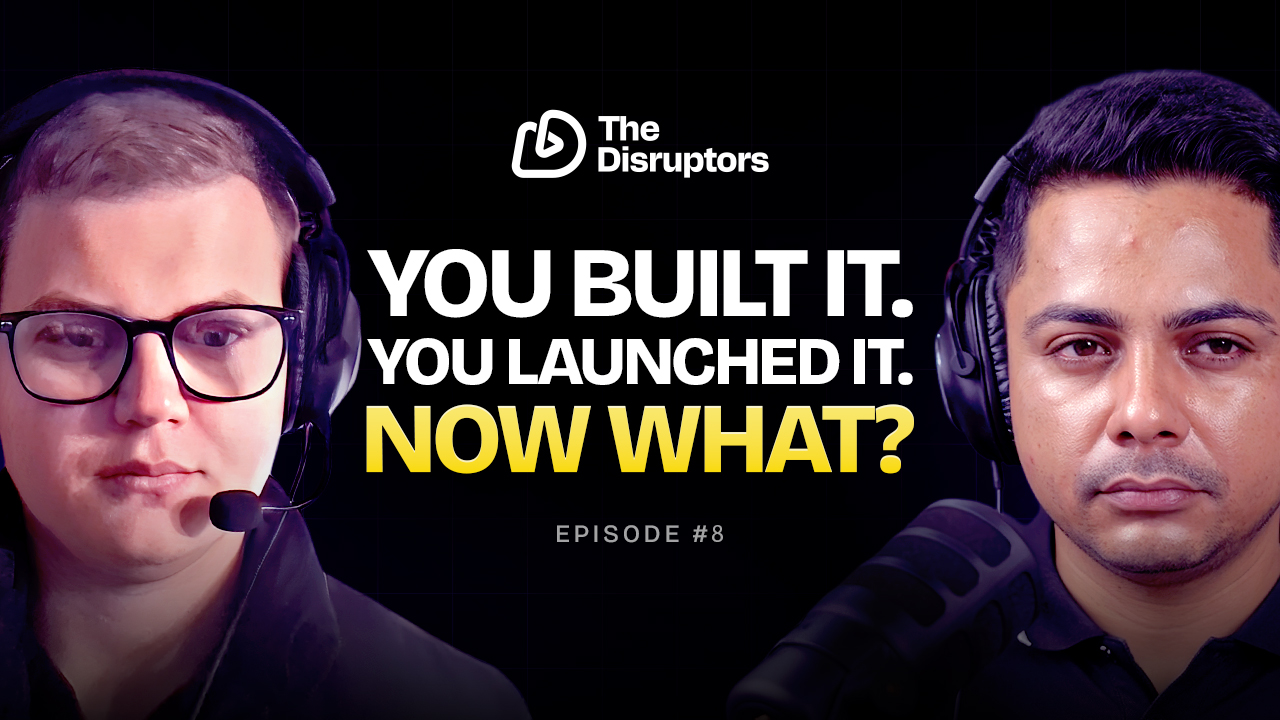


Show: The Disruptors Episode: 08
Publish Date: 04 August 2025
Digital transformation doesn’t stop when you launch your platform — that’s when it really begins.
In Episode 8 of The Disruptors, Ritesh Shah and Julian Wallis dig into the most overlooked phase of digital transformation: what happens after go-live. This is the Dominate Phase of the 4DCX Framework® — where systems either become compounding assets… or turn into stale, expensive liabilities.
They share firsthand lessons from working with established businesses — many with 50,000+ users — who confuse launch with success, and why treating transformation as a one-off project leads to stagnation, scale failure, and lost enterprise value.
This episode is your blueprint for shifting mindsets, setting strong foundations, and unlocking continuous ROI from your digital platforms.
00:00:00 – The Trap of ‘Launch and Leave’
Why most businesses stop improving after go-live
00:01:05 – What the Dominate Phase Actually Looks Like
The compounding benefits of ongoing delivery
00:02:17 – Cultural Change is Bigger Than Feature Sets
Why continuous transformation starts with mindset, not code
00:03:51 – Foundations Matter
What happens when you get the architecture wrong early
00:05:25 – Not a SaaS Startup? Stop Acting Like One
Why B2B businesses need a different playbook
00:07:29 – From MVP to Edge Factor
Turning systems into long-term strategic assets
00:10:02 – Microservices vs Monolith Debate
Why it’s not about theory, it’s about scalability
00:12:21 – Avoiding Groundhog Launches
Breaking the cycle of stalled, siloed tech investments
00:14:25 – Digital = Operational Engine
Why you need one core system powering all user experiences
00:17:20 – The Cost of a Bad Launch
What happens when 5,000 users have a terrible first impression
00:21:01 – Planning for Scale, Not Hype
How to think 10 years ahead while building for today
00:26:34 – Transformation is a Lifestyle
Tech isn’t the win. Impact is.
00:30:29 – What ‘Digital ROI’ Actually Looks Like
And why most businesses miss it
00:33:04 – You’re Not Just Building Software
You’re building competitive advantage
If you’re not evolving your system, you’re devaluing your business.
If you digitise chaos, all you get is faster chaos.
Julian Wallis, CEO at Intuji (00:00:00:01 – 00:00:08:00)
There’s a lot of digital transformation initiatives or projects that are terrible, and people still are investing in them, and they’re not getting any return. That just means the execution is wrong.
Ritesh Shah, CTO at Intuji (00:00:08:00 – 00:00:14:21)
We are not experimenting. We don’t want their customer to experiment this application, and then ‘Oh this fails here and there.’
Julian Wallis, CEO at Intuji (00:00:15:01 – 00:00:20:11)
If you make that foundational decision wrong, we’re going to be fighting that for the next 5 or 10 years.
Ritesh Shah, CTO at Intuji (00:00:20:13 – 00:00:23:16)
The ‘Dominate’ phase is not about just scaling, it’s about culture.
Julian Wallis, CEO at Intuji (00:00:23:22 – 00:00:40:10)
If we’re not constantly looking for feedback, constantly looking for how we can deliver more value. Yeah, look back in 12 months’ time, 24 months time and we’re gonna be like, we launched it, it did well, but we didn’t get any further than that.
Ritesh Shah, CTO at Intuji (00:00:40:12 – 00:00:47:22)
Hey, Julian, welcome back to yet another episode of the Disruptors podcast. How are you doing, mate?
Julian Wallis, CEO at Intuji (00:00:48:00 – 00:00:51:03)
Thanks for having me on. Yeah. Good yourself?
Ritesh Shah, CTO at Intuji (00:00:51:05 – 00:01:18:09)
Doing good mate. Today we will be discussing around, the ‘Dominate’ phase of the digital transformation. I’ve seen businesses like, invest months of planning, hundreds of thousands of dollars into new business, new system and all that kind of thing. But they take it as ticked off. Once it’s done, completed, they take it as it’s, just a task and then tick it off, and then they’re happy and then well done and then never keep improving it.
Ritesh Shah, CTO at Intuji (00:01:18:11 – 00:01:20:07)
How do you see it?
Julian Wallis, CEO at Intuji (00:01:20:09 – 00:01:40:15)
Yeah, I think definitely, it’s a thing. I think people often look at these initiatives or projects, like as you said, like it’s kind of the, when we launch, it’s the end, it’s kind of the finish of, of the project. And so they close the file and they say, yep, that’s done now and we move on. But it’s really the wrong way to look at it.
Julian Wallis, CEO at Intuji (00:01:40:18 – 00:02:01:02)
It’s, it’s like, what I compare it to for people that are listening is, like your products or your services, are you always continually improving your products and your services? You know, you’re always looking to do better, you’re always looking to work out whether we can release a new version or whatever it is, we’re constantly looking at how we can improve that.
Julian Wallis, CEO at Intuji (00:02:01:02 – 00:02:21:04)
And it’s the same thing for whatever digital transformation that we do. If you’re not looking at, like the same way and, you’re not treating your technology or your systems like your, your product and you’re just going to leave them when you’ve launched them, then, yeah, they’ll just be stale. Because we know this, you know the least about it when you actually implementing right?
Julian Wallis, CEO at Intuji (00:02:21:04 – 00:02:31:02)
You know the least, we learn so much when we go live, in the live environment that we need to fix and we need to improve, and that’s really the point.
Ritesh Shah, CTO at Intuji (00:02:31:04 – 00:02:57:13)
What I even feel is like, even the planning phase, just after the launch, what I feel is, you start learning. That’s the start of the project, not the finish of the project. That’s how I see actually, you see the application being used by different stakeholders, you see new perspectives, new ideas coming into it, and then now new planning starts.
Ritesh Shah, CTO at Intuji (00:02:57:15 – 00:03:26:16)
That’s now like is the dominant phase, as we say in 4DCX framework. What I see right now is, Dominate phase is not just dominate phase, like it’s not about just scaling, it’s about culture, like, how we continuously improve. I’ve been, that’s, that’s what I feel actually. And the other thing I expect or I think is, the most important, like the, the problem with this is like, the mode, how we start also.
Ritesh Shah, CTO at Intuji (00:03:26:16 – 00:03:52:02)
The thinking process is different. Basically what we want to do is, anyway, whenever we work with any client, they want a fixed budget to start with. Basically they just want to create a small application or tool, but they want to, don’t want to create a culture around it. The culture is like invest, it’s, it’s a long term investment, right?
Ritesh Shah, CTO at Intuji (00:03:52:04 – 00:04:25:20)
It’s not just once off thing, like you tick it off and then your application is done and dusted. We have been like a, building application again for tens of years now. So we’ve faced a lot of clients and then we have seen changes like, when we, do the thing, start with the, start with a small idea, when we start developing, the development phase has gone a lot, very far than when we, the idea has gone more focused into various, I, deviated actually from the original idea.
Ritesh Shah, CTO at Intuji (00:04:25:22 – 00:04:31:09)
We see it happening multiple times in the projects. Or do, what is the reason around it?
Julian Wallis, CEO at Intuji (00:04:31:11 – 00:05:10:17)
Yeah, I think a lot of it comes back to when, where, where it, goes off the rails, probably from, from the beginning is not clear enough discovery, not clear enough scoping of like, a lot of these businesses and systems that we’re building, we’re building the MVP. Typically, even if we’re replatform something or we’re building completely a new initiative from scratch, whatever it is, it’s, we still, we’ve got to get to that MVP stage and, and, I feel that a lot of the experience that we’ve had, where things haven’t gone that well was we haven’t got aligned with the people on, crystal clear.
Julian Wallis, CEO at Intuji (00:05:10:17 – 00:05:27:16)
“This is what we’re going to do and this is what we’re going to deliver”. And then the management of that is where, where it goes with rails. It’s, there’s so much that changes, especially when these projects go over a longer period of time. So, for example, they might go for six months. Just imagine how much changes in that business within six months right?
Julian Wallis, CEO at Intuji (00:05:27:16 – 00:06:05:22)
We even look back ourselves right, from the start of the year till now, six months ago, how much has changed in the business? And, we’re doing the same thing with clients, and clients are going through this. And so it’s constantly about that communication with them and explaining to them, and keeping aligned like, the project manager is so important to this, in regards to whoever’s managing this, this project or this initiative. And making sure that we, number one, don’t just go and run over here and do something completely different because there’s a reason we did, we planned this out in the beginning, but at the same time, we have to be prepared and agile enough to
Julian Wallis, CEO at Intuji (00:06:05:22 – 00:06:27:10)
to pivot where necessary. But then that’s going to be within some, some boundaries, right? From a scope creep perspective. And, but at the same time, it is a challenge and it always is going to be, because if we’re doing things even three, four months later than we originally planned them, then obviously, yes, these are going to be issues.
Julian Wallis, CEO at Intuji (00:06:27:10 – 00:06:55:06)
And this is where the whole point, without going into the discussion of agile and or not agile etc., but this is the whole point about scrum and continuous delivery and continuous innovation, etcetera, is that, this is the problem it’s meant to solve. But then at the same time, just coming back to what you said earlier about the fixed budget and stuff like that there, is that, when you’re working with the business or whatever else, people want fixed budgets, they want surety.
Julian Wallis, CEO at Intuji (00:06:55:06 – 00:07:13:04)
They want to know that, ‘Okay, this is how long it’s going to take and this is what it’s going to cost’. It’s a big, it’s a big thing, I guess and that’s a challenge in that regard. But it’s about, I guess, coming back to the original points, coming back to shifting their mindset to say, this is a process, not, not, not a destination.
Julian Wallis, CEO at Intuji (00:07:13:09 – 00:07:33:17)
It’s a journey, not a destination. And what’s the, we need to look at, rather the 5, 10-year vision and then break it down into a one-year vision. Right? So then we know that this is where we’re going long term, right? We know, there’s a project that I’m working on right now, in regards to a potential project with a client, for that exact thing.
Julian Wallis, CEO at Intuji (00:07:33:17 – 00:07:41:19)
We’re looking 5, 10 years ahead of where they want to get to with this. But we also know that the MVP is X.
Ritesh Shah, CTO at Intuji (00:07:41:21 – 00:08:09:15)
Yeah, I totally agree with you on that. To start with, this would be at first, a fixed budget, at least an idea what to invest, when to invest and how to invest, kind of thing. They need to decide on that, any client and and in business have to decide that. But again the, the whole digital transformation, the perspective around digital transformation, is also about the lifestyle, not just the tick box or like the, not just a task.
Ritesh Shah, CTO at Intuji (00:08:09:17 – 00:08:35:09)
Yeah, I’ve seen people, I’ve seen people continuously, every year buying a new iPhone. It’s not just, they want to use the new iPhone, they were addicted to that culture and then living to that level of standards. Buying new iPhones every year, updating themselves every year is up, they are upgrading themselves, every year. It’s not that we are asking anyone to upgrade the business, every launch, kind of thing.
Ritesh Shah, CTO at Intuji (00:08:35:11 – 00:08:57:22)
But, as, as you use the project, as you, but well one thing is like in the, firstly lets discuss, I’m coming back to another thing. Is that lets, I don’t know if our audience completely know about the 4DCX framework or not, so let’s discuss 4DCX framework. We have phases. Now today we will be discussing around, more around the.
Ritesh Shah, CTO at Intuji (00:08:58:00 – 00:09:24:14)
Dominate phase, because the Dominate phase is also what we believe is, very, very crucial where clients and we, as at the software development partner or the partner who creates the EdgeFactor, the asset. Right. We continously work together so, let’s discuss around 4DCX Framework, to help anyone understand what is what is 4DCX Framework.
Julian Wallis, CEO at Intuji (00:09:24:16 – 00:09:45:13)
Yeah, it’s a good, good question. I think the, we, we have gone through it a bit, which is, we’ve firstly got the discovery phase and we have the, the design phase and we have the development phase, and then we’ve got the dominate phase. Now, as you can see, they are all iterative phases, as you go through it.
Julian Wallis, CEO at Intuji (00:09:45:15 – 00:10:18:18)
It, it is what we call an agile model. We’ve got some of the elements from waterfall, we’ve got some things from scrum, which we work on two-week sprints, mainly in the, in the development and design phase. But yes, we know that, our projects are, or we’re working with the clients typically, they’re not fintech, they’re not SaaS, you know, their industrial businesses etc. that, they’ve got a clear, they’ve got, they’re a very successful business, they’ve got a clear goal of what they would want to get to, where they want to get to with this digital initiative, this project.
Julian Wallis, CEO at Intuji (00:10:18:20 – 00:10:42:09)
But they need surety to say, and we have to deliver in more of a waterfall model to begin with. Right. The goal is, when we get to this dominate phase though, is we start to transition much more to an agile delivery model where we’re constantly bringing improvements, right? We have done this successfully with some projects, where we’ve, we’ve got the MVP kind of launched and then we’ve gone straight into Dominate phase.
Julian Wallis, CEO at Intuji (00:10:42:09 – 00:11:01:19)
And we’re delivering continuous value. That’s the point. Right? People look at this, that aren’t familiar with what necessarily we’re talking about. They look at this and go, ‘Oh okay. But it’s just like you just want to keep billing us the development, or you want to just keep doing this’. Right. It’s not the point, the point of it is, we should be delivering far and above, so much value.
Julian Wallis, CEO at Intuji (00:11:02:00 – 00:11:23:18)
That the, it’s, it’s stupid if we don’t keep building on it, if we don’t keep investing in it. Now, don’t get me wrong, there’s going to be a time where a business needs to pause or they need to, you know, they’re not just going to continually, all the time necessarily, but you should be aiming to get there. For example, you’d want that system, that platform that you’re building to replace.
Julian Wallis, CEO at Intuji (00:11:23:18 – 00:11:43:16)
Let’s say, in your business might take out 30 or 40 people’s, you know, instead of hiring 30 or 40 people, that’s that platform, is, is that 30 or 40 people. Do you just leave them? Do you not train them? Do you not work on them? Do you not improve processes with them? If they were, if you literally had 30 or 40 people in the business, it’s the same idea here, right?
Julian Wallis, CEO at Intuji (00:11:43:18 – 00:12:03:13)
We’re constantly improving. We’re constantly building this out. But not only when we do that, it’s scalable, right? So then suddenly we can add on a whole weight more clients because of the work that we’ve done previously. So, I guess the whole point about it is, is that we get this MVP live, then we continuously deliver value in that ‘Dominate’ phase.
Julian Wallis, CEO at Intuji (00:12:03:17 – 00:12:06:16)
And that’s the 4DCX Framework in a nutshell.
Ritesh Shah, CTO at Intuji (00:12:06:18 – 00:12:33:11)
Yeah. Basically while you we’re saying that I just, I just thought of, of, Mark Zuckerberg. 10, 15 years ago, he built a Facebook for his friends. It was an MVP, if he didn’t mean to scale and maintain it properly, then Facebook or Meta wouldn’t have been here. And I totally agree with the businesses we deal, they are not a digital company, a digital software company or whatever, so they can’t always do that as well.
Ritesh Shah, CTO at Intuji (00:12:33:11 – 00:13:01:10)
But if you take it, regard it as your asset, you have to maintain it. And then, maintaining as in like, there’s, security challenges you have to deal with regularly, right? Security, not only security challenges, there are updates coming in every day, you have to cope with those updates. New, with the market change, the environment change, you have to cope with that environment change as well.
Ritesh Shah, CTO at Intuji (00:13:01:12 – 00:13:20:12)
And then, the idea of, vision change in the company, you have to cope with that as well. So, as, any business, what I believe is, as the businesses grow, the vision also go, changes, and then, evolves I guess, with that evolvement, the asset, whatever you’re building.
Julian Wallis, CEO at Intuji (00:13:20:12 – 00:13:37:06)
Yeah, they learn more about the market, they learn more about the users that are using it, the customers, all that kind of thing. And then where can, we deliver value, which gives us value back. Right. So if we give value, we get value back. And that’s, absolutely agree, that’s like, so much that we learn, when we’ve launched the MVP. And we’re continuously learning.
Julian Wallis, CEO at Intuji (00:13:37:08 – 00:14:00:02)
We’re continuously trying to deliver value. I said to someone once that was doing this to a degree in their business, where they had this platform, their EdgeFactor, we call it, right? And I said, you, you are a technology company selling X, you are not selling X that has some technology. And it is a very different mindset.
Julian Wallis, CEO at Intuji (00:14:00:02 – 00:14:22:00)
Now, at the end of the day, they’re not a SaaS company, that’s not what we’re saying. But you are, you are digital first or tech enabled, these are all cliche, whatever else I don’t care. It’s a, it’s an easy way to describe it. But you are a technology company or a tech enabled X supplier whatever. But the first thing that comes out is, we we don’t do X.
Julian Wallis, CEO at Intuji (00:14:22:01 – 00:14:46:22)
We are a technology company that supplies X or does X, right? It’s a very, very different mindset because if you do that and you think that way, then your whole business model changes to a degree, right? Like, the value of the business increases, the scalability of the business increases, like everything improves. Not that we change the physical part or what we’re doing.
Julian Wallis, CEO at Intuji (00:14:46:22 – 00:15:02:03)
That’s not the point. That still needs to be just as good, but how we’re using tech to enable us to do that, at the best we possibly, at the best level we possibly can do it, the most efficient we can possibly do it, and the most scalable that we can possibly do it, do, do all those things.
Julian Wallis, CEO at Intuji (00:15:02:03 – 00:15:07:04)
And then you increase your enterprise value.
Ritesh Shah, CTO at Intuji (00:15:07:06 – 00:15:37:01)
Exactly. Again, I, my work somehow works with the analogy and all that kind of thing. I, if I can relate something to, like, then it makes more sense. Again. I was thinking of this while you’re speaking. I was like, assets or this digital transformation, it’s just, like building a house. Basically, what is, it is like, when you start living in it, once you build a house, it’s not just, you build a house for ten years now you’re done and dusted.
Ritesh Shah, CTO at Intuji (00:15:37:01 – 00:16:01:13)
You change your sofa here and there, according to the way the sun, somewhere, the sunlight is not there, so you change the sofa. You change the room colour, you do continuous changes and then develop it in your house. Interior or exterior, you start doing developing and maintaining it, basically that’s, you’re maintaining, and then you, as your family grows, your requirement changes and all that kind of thing changes.
Ritesh Shah, CTO at Intuji (00:16:01:19 – 00:16:30:18)
And then you again, like making the changes to the thing. Basically, the foundation remains the same, but still, there are a lot of changes right. So again, it’s same thing with I believe, our, our target market or our, whoever’s are listening to us, what we want to say here is that, digital transformation, don’t take it any, your transformation as it’s just a task for you.
Ritesh Shah, CTO at Intuji (00:16:30:20 – 00:16:38:01)
If you take it as a task, and tick it off, it’s done and dusted, then you forget it. It won’t work.
Julian Wallis, CEO at Intuji (00:16:38:03 – 00:16:56:19)
Yeah, definitely 100% it won’t work. Because you launch it, and as we’ve said, when you launch it, you typically know the least about it. It’s the same thing when we start projects, we know the least about it. The longer we go in the project, the longer we’re more invested in it, the more we know about it, essentially. And, it doesn’t mean that when we launch it, it’s never going to work, or we should be launching a very bad thing.
Julian Wallis, CEO at Intuji (00:16:56:19 – 00:17:16:12)
That’s not the point. You could launch something and it might work, right? And it might get results and it might, might do well, it’s not to say that that’s not the case. But you take two different, it’s just like the, comparing like, someone that’s always learning or someone that’s, you know, continuously learning versus someone that’s, that’s not. Continuous improvement and continuous learning.
Julian Wallis, CEO at Intuji (00:17:16:14 – 00:17:34:13)
If someone’s not, let’s say, one individual that’s always learning and continuously improving, the other individual that’s not, they’re both at the same level. Now, where are they going to be in a year or two years time? I can tell you the person that’s going to be far ahead of the other one, which is the one that’s, the person, always continuously improving, continuously learning, constantly pushing themselves.
Julian Wallis, CEO at Intuji (00:17:34:15 – 00:17:58:18)
It’s the same, the same thing. It’s not rocket science, right? It’s the same thing here and it’s like, your system is the same. And a lot of people, I guess, even when we talk about this, people don’t understand probably even what we’re talking about or to a degree is like, this can apply to your CRM. It could apply to your ERP in, in a, in a basic form, where you know you’re improving, you’re cleaning things up, you’re making sure processes are as good as possible.
Julian Wallis, CEO at Intuji (00:17:58:18 – 00:18:23:23)
All that kind of stuff. Right. It can apply to that. But, even more important is when you start building your own technology, right? This is what we’re talking about with your EdgeFactor, you’re own operation systems, your B2B portals, your customer portals, your warranty portals. Whatever it is. Yeah, mobile applications for distributors, dealers, whatever the whole, it doesn’t matter about the interface or the head or whoever’s using it, the underlying technology.
Julian Wallis, CEO at Intuji (00:18:23:23 – 00:18:45:06)
The same principle applies, if we’re not constantly looking for feedback, constantly looking for how we can deliver more value. Talking with those users, saying, if we did X, how would that work? And they’re like, oh, wow, that would be amazing. All of these things then, yeah, look, back in 12 months time, 24 months time and you’re gonna to be like, cool.
Julian Wallis, CEO at Intuji (00:18:45:08 – 00:18:50:09)
Yeah, we launched it. It did well, but we didn’t get any further than that.
Ritesh Shah, CTO at Intuji (00:18:50:11 – 00:19:20:13)
So yeah, again, when you’re building a, your EdgeFactor, one thing we always, try to keep in mind that, we try to focus on building your base foundation properly, so that whenever you scale, whenever your vision changes, the, the application also could change, without breaking the whole thing down. So that’s what, that’s what we also call one of the aspects of our, design process.
Julian Wallis, CEO at Intuji (00:19:20:13 – 00:19:41:00)
We’re heavy, heavy on API first right, or microservices to a degree. And even just on this, I want to comment on this because, I think there’s, there’s people out there that are like, get an MVP like, you know, forget microservices. It’s overengineering. It’s so much of a waste of time and money. All of this kind of stuff. But they don’t understand.
Julian Wallis, CEO at Intuji (00:19:41:01 – 00:20:04:06)
Especially, for example, if you’re a founder-led, a technical founder, like I said, you’re a technical founder building a SaaS product, that’s one thing you can build monolithic. You can manage it all, you can do what you need to do. It’s, it’s a very different story to doing that, to working on a team of 5 to 10 engineers, in a short space of time, working with a large business that’s already there, that has no technical skills, that we’ve got to translate their vision into something, right.
Julian Wallis, CEO at Intuji (00:20:04:06 – 00:20:28:10)
It’s a whole different story. And what we know for a fact, from experience of these projects, is how much changes over the course, not only the project, but the life of the product. Right. And, just from that experience, we know now, of how we need to build scalable architecture so we can make changes as quickly and efficiently as possible.
Julian Wallis, CEO at Intuji (00:20:28:12 – 00:20:50:08)
But at the same time, it’s as flexible as possible, rather than being some behemoth that is almost impossible for a team of people to jump in and out of. This is another thing, like, yeah, I don’t want to get into that, I know it’s not the topic of today necessarily specifically, but I think it’s important, that if you are going to dominate, there’s, there’s more than one way to achieve things.
Julian Wallis, CEO at Intuji (00:20:50:08 – 00:21:14:13)
And people need to realise that, and people need to understand and work with the right partner that understands their business and the long-term success, and has had success in their space and knows how to build, not only the architecture properly, but everything properly, in regards to actual features and everything. But if you make that foundational decision wrong or you like, get that wrong, we’re going to be fighting that for the next 5 or 10 years.
Ritesh Shah, CTO at Intuji (00:21:14:15 – 00:21:40:16)
Again, coming back to this monolithic and microservices discussion, this has been going for a long time, and in this, in this whole industry, yes. Building for, when you are small, starting up small and then monolithic is easy, maintainable and all that kind of thing. But, when you’re trying to build a hundred storey building, you build a foundation properly. Right?
Ritesh Shah, CTO at Intuji (00:21:40:18 – 00:22:10:18)
Build the foundation properly, the plan, the vision is to go there. If your vision is not to build a one-storey building, then you plan the vision on a different property. You don’t invest on another thing. So, basically you are planning to, to get there, it might take ten years, we know that. But hey, we might, we should be agile, the application should be agile enough to, ok, see the, evolve with the business, the changes, business scale and everything.
Ritesh Shah, CTO at Intuji (00:22:10:19 – 00:22:31:18)
If we are not scalable, the application is not scalable, in a business, if it works properly and in a month’s time, it can scale like thousands of times, like from, going from one customer to ten customers, it might take time, but from ten customers to one hundred is easier, right?
Julian Wallis, CEO at Intuji (00:22:31:20 – 00:22:58:02)
Yeah, correct. I think the big misconception here as well, is like, we’re working with very successful, established businesses. Some of these applications have tens of thousands, more than that, we’ve, we’ve talked to clients that are having 200,000 users, more than that, right. We’re not building a SaaS startup MVP, that has no product market fit or all of this, it’s a completely different thing.
Julian Wallis, CEO at Intuji (00:22:58:04 – 00:23:19:06)
So many of these, I know this even, the same reason I’m focusing on this, because I think it links to the dominate phase, and I know for a fact of the current situation, where this is happened, where, even another partner has presented a technical solution, that we would look at and say, that is, that is not, that is not in your, in the client’s best interest long term.
Julian Wallis, CEO at Intuji (00:23:19:08 – 00:23:37:22)
Right. But that person has not had experience, that, their experience is just this ‘Nuh, we should be nimble, we should be small’, that, they’re thinking from an MVP of like, let’s build a SaaS product, a SaaS startup and test the market. What we’re doing is not that as we know, right? If that makes sense. We’re not working on those.
Ritesh Shah, CTO at Intuji (00:23:37:22 – 00:23:39:05)
We are not experimenting.
Julian Wallis, CEO at Intuji (00:23:39:07 – 00:23:58:19)
Yes, correct. We’re not experimenting. We’re working on a project that we know, is going to be the long term vision of the business, right? So, we build it properly from the start. If we’re going to invest the amount we’re going to invest, that is needed to do this properly, then we wouldn’t, we shouldn’t be doing it half heartedly.
Julian Wallis, CEO at Intuji (00:23:58:19 – 00:24:15:18)
Right? It should be done properly and make sure that everything is, is checked off and, there’s just so much there, and that’s what I want to focus on. We need to get these foundations right. If we do, dominate, the dominate phase is is there for the taking, for the business.
Ritesh Shah, CTO at Intuji (00:24:15:20 – 00:24:39:18)
Exactly. And then like, again to, we are not experimenting. We don’t want our, their customer to experiment this application and then ‘Oh, this fails here and there, this is laggy and all that kind’, or ‘Oh I’ll tweak this over and then increase the capacity’ or they’ll wait for this thing. The, from the day first, first impression is the last impression for these customers right?
Ritesh Shah, CTO at Intuji (00:24:39:20 – 00:24:54:06)
Firstly, yeah when, when they, they experience this app or this slow whatever, the experience is very bad then like, that is the last impression, ‘Oh, this will never improve’, kind of thing.
Julian Wallis, CEO at Intuji (00:24:54:08 – 00:25:14:18)
Yeah hundred percent, and like again, coming back to each point of like, we’re working with businesses that, some of them have got 50,000, even 100,000 customers, more than that. Right, and records and things like that there. Again, we’re not starting here for a SaaS startup that’s got 5 or 10 customers in the database that we’re doing this, it’s like you would have hundreds of thousands of users, or in records, etc., that in there.
Julian Wallis, CEO at Intuji (00:25:15:00 – 00:25:36:03)
Not only that, we’ve had operations that have had over 30 locations, etc. running at once, right, that are using the system, etc. and so I guess the point of it is, is that, when you’re working with a massive established business, that this is going to be rolled out to established users and customers, it’s a very different story to building a SaaS product from the start.
Ritesh Shah, CTO at Intuji (00:25:36:05 – 00:26:04:23)
Yeah, basically, again, I’m imagining the whole thing, like a, a business with 50,000 customer launching the app, and it’s a crap, right? The 50,000, like even 5000 users had a bad experience or 1000 then gaining back those again customers, are very difficult. IT’s, it’s, it’s again a, a bigger cost to them actually, be a bigger cost to them.
Ritesh Shah, CTO at Intuji (00:26:05:01 – 00:26:05:19)
Yeah.
Julian Wallis, CEO at Intuji (00:26:05:21 – 00:26:31:18)
100%. And it’s a massive risk, and this is even for ourselves. We need to realise this when we’re working with clients is that, this isn’t just a, we launch it and etc., you know, had a recent experience where, you know, we’ve had challenges with launching. And this is exactly what I’m saying, is that, this is the customer’s impression, and this is, this is how the product works, right?
Julian Wallis, CEO at Intuji (00:26:31:20 – 00:27:13:04)
This is the success of the product, right? The foundational success of the product. Are, have we got that trust moving forward? That’s on, on, on launch obviously, but have we got that trust moving forward for those customers? And yes, with that particular product, we built a really good product overall so. And yeah, we’ll sought out those challenges. But the point of it is, is it’s so important, we can never learn enough and know enough about these launches, and preparing for it and making sure that, not just the launch, but everything regarding that experience, is well thought out and well thought through.
Julian Wallis, CEO at Intuji (00:27:13:04 – 00:27:15:12)
Because if it’s not, we risk losing those customers.
Ritesh Shah, CTO at Intuji (00:27:15:14 – 00:27:32:20)
Coming back to the other topic of today, the ‘Dominate’ phase. We have been jumping around with a lot of topics. When we discuss with, this happens right, we discuss a lot of things, and then this is fun of doing this podcast and episode as well, I love it. Like jumping from here and there and then coming back, again coming back to the point as well.
Julian Wallis, CEO at Intuji (00:27:33:02 – 00:27:57:05)
It can really help businesses or trying to help them understand is that, again, we probably sound like a broken record, but it is that foundation, it is that structure, etc. that sets up the long term success of, of the business. It’s not just technical, it’s the idea of the product right, at the foundation is a technical and sound? Yes. Okay. At the foundation, is the core idea and the principle of what we’re trying to do actually feasible?
Julian Wallis, CEO at Intuji (00:27:57:07 – 00:28:18:15)
Is it intelligent? Because if any of these, let’s call them pillars right, are wrong, then what are we actually doing even here? And this is where, the idea of it and everything like that, that, that what we call the acid test or whatever, where we actually challenge that, that idea is, PSV Thinking, where we’re increasing profitability, enabling scale and building enterprise value.
Julian Wallis, CEO at Intuji (00:28:18:17 – 00:28:39:21)
But again, it’s the same kind of thing, we can, we need to be technically sound from a foundation perspective but we also need, the idea needs be sound. It needs to be, pass The PSV Thinking test, of saying, this is a long-term initiative that we can see influencing all of these areas of the business. Right. And if we can do that, then we know. We might not get there in one go.
Julian Wallis, CEO at Intuji (00:28:39:21 – 00:28:56:03)
As we’ve said, we get the MVP, but then we go into the dominate phase, and we still come back to what? PSV Thinking. The technical architecture’s there, the technical foundation, it’s just constantly asking, how can we use this system? Our EdgeFactor, to influence these three pillars, and then we just constantly deliver value on those things.
Ritesh Shah, CTO at Intuji (00:28:56:05 – 00:29:27:14)
So EdgeFactor again, coming back to EdgeFactor, EdgeFactor again, it’s a building your asset guys. With the, if you are building an asset, an asset is not just a once off thing. You have your assets. It will, you maintain it, build things around it. So, building like, again, I have already given the example of house and everything. Everything, it’s always, if you’re, if you’re building, it’s not a once off thing.
Ritesh Shah, CTO at Intuji (00:29:27:14 – 00:29:51:11)
An asset is never a once off thing. You don’t want to, and in digital, while discussing this we don’t want to also think of this as, I don’t, I’ll correct myself first. Okay, we are trying to build your asset, not a liability. A EdgeFactor, not a liability. Liability as in, we are talking about in the Dominate phase, we have to maintain, there’s a cost and all that kind of thing.
Ritesh Shah, CTO at Intuji (00:29:51:13 – 00:30:15:19)
But, cost to scale again, cost to again scale, to reinvest that, the change of that. It’s not that, okay, we say the asset, we say the EdgeFactor and all that and then we are talking about reinvesting and continuously reinvesting as that, in the Dominate phase, that is when we scale. It’s not that actually, it’s about evolving.
Julian Wallis, CEO at Intuji (00:30:15:21 – 00:30:33:15)
I think it’s, coming back to, as I said earlier, it’s about consistently delivering that value. Right. And getting return for the business, this is the point. So let’s just say, it’s an asset, it’s not a liability, but an asset is generating returns for the business. That’s the point. Sometimes assets need investment, they still need money to keep running, etcetera.
Julian Wallis, CEO at Intuji (00:30:33:15 – 00:30:52:01)
That’s not the point. But that’s generating returns for the business and this is, if, if you’ve got a platform, an initiative that is not generating the ultimate returns of the business, and then yeah, look at it. Like this isn’t about going, there’s a lot of digital transformation initiatives or projects that are terrible, and people still are investing in them, and wondering, they’re not getting any return.
Julian Wallis, CEO at Intuji (00:30:52:01 – 00:31:08:13)
That’s not what we’re talking about. You should, the point of it is, that just means the execution’s wrong. What you should have done is made sure that we got the execution right. If we get the execution right, the returns there, we should keep investing in it. It’s that simple, right? And a lot of people just focus in the wrong areas and don’t know what to focus on.
Julian Wallis, CEO at Intuji (00:31:08:13 – 00:31:29:23)
And further than that, they underestimate, the upfront investment from both a, a money and a time level that is needed. I’ve said this time and time again, they underestimate the level of investment from both time and money required to get this off the ground and to build the scalable architecture to begin with, that it has a genuine change on the industry and that kind of thing.
Julian Wallis, CEO at Intuji (00:31:30:01 – 00:31:53:20)
This isn’t just about delivering a B2B portal or an e-commerce website, right? It’s a whole different conversation. I was having this conversation with a potential client the other day as well, that was talking about, you know, their first conversation kind of came to us and said, oh, we want to build an e-commerce website, you know, B2B e-commerce. And I was like, well we’re not the people for that, if that’s what you want to do, like if that’s all you want to do, why not the people for that.
Julian Wallis, CEO at Intuji (00:31:53:20 – 00:32:17:19)
And they were like, Okay, Interesting, kind of, why is that? I said, well, why do you want to just build an e-commerce website? That’s, you’re not doing anything different. It’s a whole different mindset to look at, ‘How do we use tech to constantly enable the business to dominate our industry, right?’ That’s the whole point of the Dominate phase. It’s a whole different approach to say, what if we could do this? Right.
Julian Wallis, CEO at Intuji (00:32:17:21 – 00:32:40:02)
For example, if, with what we’re building ourselves with IntujiOS, not to rant on here, but, is, if we don’t, which we’re doing, but if we don’t ask ourselves, what if we did it this way? OR what if we could do this? Then, we would just go and build what everyone else has built previously, right? Which is not what we’re doing, for, for a reason.
Ritesh Shah, CTO at Intuji (00:32:40:04 – 00:33:05:12)
Exactly. What we were discussing, our mindset also changed over the ten years. We were, so I think taking technology as, for the sake of technology and trying to, we were also building e-commerce like ten years ago. That was how we started. But now, we regard this e-commerce or everything as a tool, to be valuable, to be profitable and to be scalable.
Ritesh Shah, CTO at Intuji (00:33:05:13 – 00:33:40:17)
This is tool, could be e-commerce, could be whatever, but it’s a tool to get there. It’s not the final actually basically. What can e-commerce do? E-commerce is scalable, I guess. I think you can create a user experience, self-service user experience kind of thing, that is e-commerce, right? That is what e-commerce enables. It gives a business. The outcome is, we have named as e-commerce for a while, for now and then everyone is thinking.
Ritesh Shah, CTO at Intuji (00:33:40:17 – 00:33:46:04)
But everyone wants scalability, right? For their business.
Julian Wallis, CEO at Intuji (00:33:46:04 – 00:34:03:13)
Systemisation, Yeah. Which comes from, scalability comes from that systemisation. Absolutely. I think, as you said earlier about building that house, you think about it, like tools, like e-commerce or anything in digital transformation you could use, e-commerce, you could use AI, you could just use self-service portals, you could use ERPs, you could use, whatever you want to put in there.
Julian Wallis, CEO at Intuji (00:34:03:13 – 00:34:24:15)
They’re not all the exact same, on the same level, but the whole point of it is, all of these things are tools that help us, we should be using to create our end experience. Like, what’s our overall experience from, for employees, for customers, for dealers, distributors, whoever it is, what’s our overall experience? And imagine someone, that is building a house has all the hand tools, has the power tools, has everything.
Julian Wallis, CEO at Intuji (00:34:24:17 – 00:34:47:12)
But the end of the day, that building, that overall experience, it’s the same kind of thing. But, again, not to, let’s just take the specific house analogy, when we’ve got five different stakeholders, we should be having one engine that runs the house or the, we’ve talked, this is the analogy I use for kind of that microservices or headless architecture. We’re building the powerful engine, that five vehicles run off.
Julian Wallis, CEO at Intuji (00:34:47:13 – 00:35:11:09)
Right. So every vehicle, the same engine, but every, there’s five vehicles that run off that engine. But the, every vehicle is, set up, for the employee or the, the dealer or the, customer or whoever it is, that’s their vehicle, but we’re just running it off the same engine. That’s a very different approach to just like, oh, let’s build a website.
Julian Wallis, CEO at Intuji (00:35:11:13 – 00:35:25:09)
Let’s build an app. Why? What are we doing? What are we actually trying to do here? What do you, are you trying to do something that the industry has never achieved before? Or are you just building an app or website? There’s a very big difference in mindset.
Ritesh Shah, CTO at Intuji (00:35:25:11 – 00:35:43:08)
Yeah, yeah, I’ve seen this kind of discussion, ‘Oh, I want AI and everything implemented, it all implemented’. And then, what is the value? They’re just trying to implement. It’s like, what is the value bringing? There’s not thought about it that at all. The, they’re just going through the market like ‘Oh, I want this, this, this in the application’.
Julian Wallis, CEO at Intuji (00:35:43:08 – 00:35:44:10)
Tech for the sake of tech.
Ritesh Shah, CTO at Intuji (00:35:44:12 – 00:36:08:12)
Exactly, again. Yeah. And they’ve learned it from everywhere, the social media and everywhere that ‘Oh, this is the tool, okay, okay’. But they haven’t, or they haven’t actually decided on how to get there. It’s not that they’re totally wrong, it can be implemented and everything. But it’s how to get there, because again, AI also needs data, works on data.
Ritesh Shah, CTO at Intuji (00:36:08:13 – 00:36:10:15)
Your data.
Julian Wallis, CEO at Intuji (00:36:10:17 – 00:36:31:12)
Yeah. Correct. And this is where again, again, the irony of it, especially the businesses that we work with, I’m talking about every single business. But the businesses that we work with, in our space in the industries, such as, kind of manufacturing, wholesale or industrial services, but it’s the fact that, the majority of them are nowhere, they, they’ve, they’re 2% along their digital transformation journey.
Julian Wallis, CEO at Intuji (00:36:31:17 – 00:36:52:17)
Right. 2 or 5%, whatever we want to call it. Yes, they’ve got an ERP implemented, they’ve got a CRM implemented, but the CRM’s just dirty, there’s data everywhere. It’s not set up properly. Their ERP typically is very, very customised, very clunky, not always. Not every time, but just saying, it’s a very common, in this space. And then they’ve got, they’ve got a portal that’s disconnected.
Julian Wallis, CEO at Intuji (00:36:52:17 – 00:37:09:18)
It’s on one piece of thing. And then their, the marketing websites over here doing something else. And they, they, they tried to build a mobile app. They built it as cheaply as possible, and they did it with this person, but they had no idea why they were doing it. But now they want to go and implement AI and build a chat bot, like, it’s just a complete wrong.
Julian Wallis, CEO at Intuji (00:37:09:20 – 00:37:24:12)
It’s a complete wrong way to think about it, as in, if you’re found, and again, coming back to what you said earlier, but if the foundation isn’t there, if we haven’t, like for example, if you’re trying to implement AI and your customers are still having to phone you for every single order, you’ve got a problem. If that makes sense?
Julian Wallis, CEO at Intuji (00:37:24:12 – 00:37:46:06)
If, this is where, and it’s kind of the 80/20 rule, can customers do 80% of their business with you, digital or digitally or not? Can they self-service 80%? If not, then what are we doing? Right. And that comes back to, not just like, oh yeah, I can check orders or I can check shipping. Your whole business, can.
Julian Wallis, CEO at Intuji (00:37:46:06 – 00:38:14:06)
They do 80% of what the account manager, the customer service manager, the sales manager, whatever would do for that customer, can they do that themselves whenever they want to, wherever they want it? Right. And for example, we might take, we’re working with the potential client now, as you know, within a specific industry, but where essentially, we’re trying to not only do this from an orders perspective and everything else, that’s, that’s amateur or like basic level.
Julian Wallis, CEO at Intuji (00:38:14:06 – 00:38:39:06)
But how do you then, with these dominate phase, how do we look at going, let’s deliver value at scale, that a human could do or we could do or an algorithm or whatever else, but, that is delivered to everyone in real time, in their own personalised experience, which is, you know, maybe this particular instance, is an application. But we’re not just showing them, Oh, your order was picked up.
Julian Wallis, CEO at Intuji (00:38:39:07 – 00:38:47:15)
We’re actually adding value to their operations and their end which then they become part of our ecosystem and don’t leave. Right.
Ritesh Shah, CTO at Intuji (00:38:47:17 – 00:39:16:12)
Exactly. But I also felt is, digital transformation is, not just about working in the business or working on the business, as we discussed, have been discussing this for quite often, while we were building IntujiOS in our company as well. It’s like, suppose we have an application, and if someone has to go on a vacation for three months, they can still, the business can still run, operate it with all the system, everything.
Ritesh Shah, CTO at Intuji (00:39:16:12 – 00:39:35:22)
Self-service, employee has all the data they need. The team members have all the data. They can self-service their job, everything is done. That’s the level of digital transformation we aim for. That’s the, that is the basics right now. That is the fundamentals for every business I guess.
Julian Wallis, CEO at Intuji (00:39:35:22 – 00:39:52:22)
It should be, but no one’s, no one’s, no one’s nearly there alright. And this is the point, we know for a fact that then, even when businesses are valued or whatever, even for investment, not even for selling or whatever, itd just, they’re looked at like, okay, hoe, wow, this company is doing something that no one else could do. And then this is, that’s one point of it.
Julian Wallis, CEO at Intuji (00:39:52:22 – 00:40:14:17)
The other significant point for us, and what we’re more focusing on for IntujiOS and even, I’m saying, for specifically for ourselves, for our own EdgeFactor is, it should be the number one reason people deal with us. For example, they want IntujiOS, right? Because it gives them value that they could not get anywhere else. And that’s, it’s that simple.
Julian Wallis, CEO at Intuji (00:40:14:19 – 00:40:20:04)
Have you got that in your own business? That’s what we’re trying to help you build.
Ritesh Shah, CTO at Intuji (00:40:20:06 – 00:40:44:07)
Alright, guys, then was try to summarise this episode, for the disruptors. Thanks, Julian. It was, I had a lot of fun today, with just thinking and then, discussing. We had nothing planned, nothing at all. But we enjoyed talking, and then hope you guys, our listeners also enjoy the talk, the way we talk and all that kind of thing.
Ritesh Shah, CTO at Intuji (00:40:44:09 – 00:41:01:23)
We have a lot of things to share and in other episodes as well, as we grow, we evolve, we share our learnings and then we try to disrupt the market, your business in a better way, in a better direction, the best direction we can. Thanks guys. Thanks Julian.
Julian Wallis, CEO at Intuji (00:41:02:01 – 00:41:04:00)
Thanks, mate. That was a good chat. Thank you.
Ritesh Shah, CTO at Intuji (00:41:04:02 – 00:41:37:01)
That’s a wrap on this episode of The Disruptors. If you are serious about unlocking your EdgeFactor®, the thing that sets your business apart and helps it grow sustainably. Don’t forget to follow, share and leave a quick review. We will be back next week with more real-world insights and no fluff conversations on how to rethink your systems, modernise operations, and build value that lasts. Until then, stay safe, stay focused, and keep disrupting!

August 20, 2025